How Modern Premium Looking Websites are built
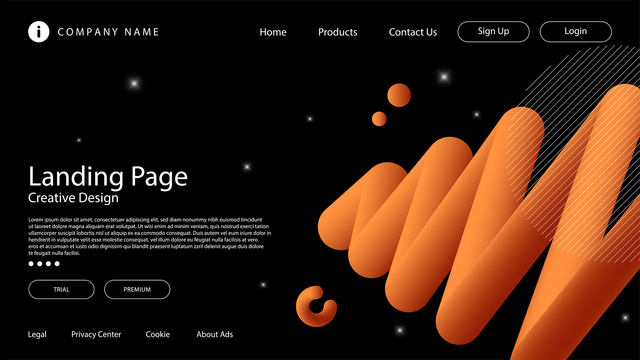
To build a super-premium, modern website that matches the quality of high-end marketplace templates (like those on Awwwards or premium Webflow/Next.js marketplaces), you need a specific combination of professional design tools, a robust development stack, and fluid animation libraries.
1. The Design Phase (Where Premium Begins)
Super-premium websites are never coded from scratch without a rigorous design phase. Elite templates always start here:
- Figma: The industry standard for UI/UX. Premium sites rely heavily on custom grid layouts, responsive auto-layouts, and design systems (consistent typography, spacing, and color tokens).
- Spline or Blender: Used to create interactive 3D assets. Premium sites frequently incorporate embedded, interactive 3D elements to capture user attention.
2. The Elite Tech Stacks
Depending on whether you want a visual-first workflow or a code-first workflow, top-tier creators use two main stacks:
Code-First: The Next.js Stack
This is the stack used for high-performance, ultra-fast, premium agency and SaaS sites.
- Framework: Next.js (React) for server-side rendering, top-tier SEO, and instant page loads.
- Styling: Tailwind CSS or CSS Modules for highly customizable, utility-first layouts.
- Headless CMS: Sanity.io, Strapi, Payloadcms, or Contentful to handle data without slowing down the frontend
Visual-First: The Advanced Webflow Stack
This is how independent creators design and launch premium templates rapidly.
- Core Platform: Webflow paired with advanced structural frameworks like **Relume **or Client-First by Finsweet to ensure clean, scalable code.
- Component Bridges: DevLink to export those visual layouts into native React components if needed.
3. The "Premium Secret": Motion & Micro-interactions
What separates an average website from a "super-premium" template is smooth, performance-optimized animation. If it doesn't move elegantly, it isn't premium.
- GSAP (GreenSock Animation Platform): The undisputed king of premium web animation. Used for intricate scroll-driven animations, text reveals, and complex timelines.
- Motion (formerly Framer Motion): The go-to animation library for React/Next.js apps. It handles enter/exit animations and layout transitions seamlessly
- Lenis Smooth Scroll: A lightweight library used to normalize and smooth out scrolling behavior across different browsers, giving the site a sleek, fluid feel.
4. Characteristics of Modern Premium Design
To make a website look expensive, implement these design principles:
Bento Grid Layouts = (Modular, clean content blocks)
Fluid Typography = (Scales perfectly from mobile to 4K)
Dark Mode Contrast = (Deep blacks with subtle gradients)
Micro-Interactions = (Magnetic buttons, custom cursors)
- Immersive Typography: Using high-end fonts from Typefoundries or custom premium fonts (like Helvetica Neue, PP Neue Montreal, or Clahson).
- Bento Grid Layouts: Visual grids that compartmentalize information beautifully, mimicking Apple's interface design.
- Subtle Noise & Gradients: Applying a very fine, low-opacity noise overlay over rich radial gradients to give the background a tactile, high-production texture.