Master SOLID principles - Cleaner Code
Mastering the SOLID Principles: Your Guide to Cleaner Code
As developers, we’ve all been there—staring at a mess of tangled, spaghetti code that feels like a house of cards ready to collapse. You add a new feature, and suddenly, something unrelated breaks. The clock’s ticking, the pressure’s on, and you’re wondering, “How did it get this bad?” Sound familiar? That’s where the SOLID principles come in—a set of five object-oriented design principles that act like a lifeline, helping you write cleaner, scalable, and maintainable code that you (and your team) won’t dread working with.
In this post, we’re going to dive into each SOLID principle with a friendly, down-to-earth approach. We’ll use relatable examples, a bit of humor, and practical tips to make these concepts stick. Whether you’re a newbie coder or a seasoned pro, you’ll walk away feeling empowered to tame even the wildest codebase. Let’s get started!
What Are the SOLID Principles?
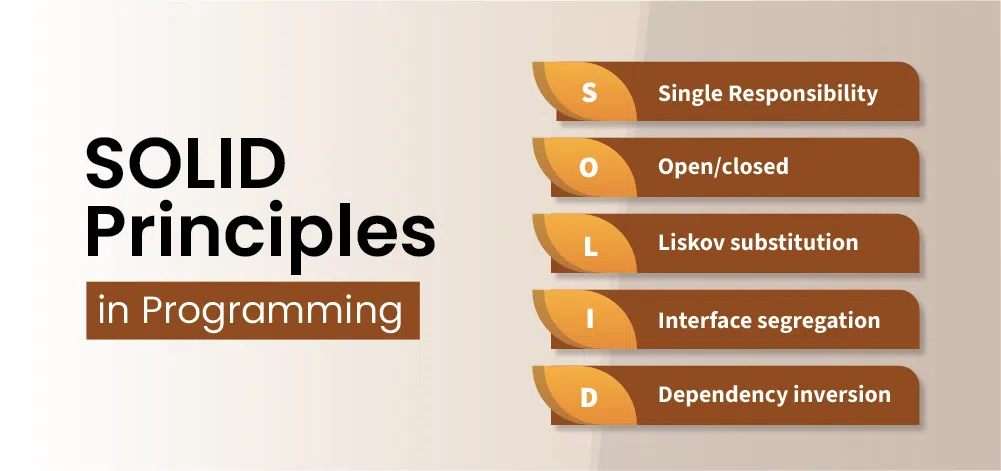
SOLID stands for five key principles introduced by Robert C. Martin (aka Uncle Bob) to make your code more modular, flexible, and easier to maintain. Think of them as the golden rules of object-oriented programming (OOP):
- S - Single Responsibility Principle
- O - Open/Closed Principle
- L - Liskov Substitution Principle
- I - Interface Segregation Principle
- D - Dependency Inversion Principle
These principles aren’t just academic jargon—they’re practical tools to save you from late-night debugging sessions and endless refactoring. Let’s break them down one by one, with examples that hit close to home.
1. Single Responsibility Principle (SRP): One Job, One Class
What It Means
A class should have one job and one reason to change. If your class is juggling multiple tasks, it’s like asking a chef to cook, serve, and clean the restaurant all at once—chaos ensues.
Why It Matters
When a class handles too many things, a change in one area (like updating how emails are sent) can break something unrelated (like user data storage). SRP keeps your code focused, making it easier to debug, test, and maintain.
Example: The Overworked Class
Picture this: you’re building a user management system, and you create a User class that does everything:
class User:
    def save_user(self, user_data):
        # Save user to database
        print(f"Saving {user_data} to database")

    def send_email(self, user_email, message):
        # Send email notification
        print(f"Sending email to {user_email}: {message}")
This class is a workaholic, handling both database saves and email notifications. If your email provider changes their API, you’re stuck tweaking the User class, even though it’s supposed to be about users, not emails. That’s a recipe for bugs.
Refactored Example: Giving Everyone a Break
Let’s split the work:
class User:
    def save_user(self, user_data):
        # Save user to database
        print(f"Saving {user_data} to database")

class EmailService:
    def send_email(self, user_email, message):
        # Send email notification
        print(f"Sending email to {user_email}: {message}")
Now, User focuses on saving data, and EmailService handles emails. If the email system changes, you only touch EmailService. Your code is happier, and so are you.
2. Open/Closed Principle (OCP): Ready for Growth, No Surgery Required
What It Means
Your classes should be open for extension but closed for modification. In other words, you should be able to add new features without hacking into existing code.
Why It Matters
Changing existing code is like performing open-heart surgery on your app—one wrong move, and the whole system crashes. OCP lets you add new functionality safely, keeping your codebase stable.
Example: The Fragile Calculator
Imagine a class that calculates the area of shapes:
class AreaCalculator:
    def calculate_area(self, shape, dimensions):
        if shape == "rectangle":
            return dimensions["width"] * dimensions["height"]
        elif shape == "circle":
            return 3.14 * dimensions["radius"] ** 2
Want to add a triangle? You’d have to crack open calculate_area and add another elif. Every new shape means more changes, and more chances to break something.
Refactored Example: Growing Without Pain
Let’s make it extensible using an abstract class:
from abc import ABC, abstractmethod

class Shape(ABC):
    @abstractmethod
    def calculate_area(self):
        pass

class Rectangle(Shape):
    def __init__(self, width, height):
        self.width = width
        self.height = height

    def calculate_area(self):
        return self.width * self.height

class Circle(Shape):
    def __init__(self, radius):
        self.radius = radius

    def calculate_area(self):
        return 3.14 * self.radius ** 2

class AreaCalculator:
    def calculate_area(self, shape: Shape):
        return shape.calculate_area()
Now, adding a Triangle class is as easy as creating a new class that implements Shape. No need to touch AreaCalculator. Your code is ready for growth, no scalpel required!
3. Liskov Substitution Principle (LSP): Swap Without Surprises
What It Means
Subclasses should be substitutable for their base classes without breaking anything. If a subclass acts in a way that defies the parent class’s expectations, you’re in trouble.
Why It Matters
If a subclass behaves unexpectedly, it’s like lending your car to a friend who doesn’t know how to drive stick—things go wrong fast. LSP ensures your subclasses play nice.
Example: The Flightless Bird Problem
Here’s a Bird class with a fly method:
class Bird:
    def fly(self):
        print("Flying")

class Sparrow(Bird):
    def fly(self):
        print("Sparrow soaring!")

class Ostrich(Bird):
    def fly(self):
        raise Exception("Ostriches can't fly!")
Using Ostrich where a Bird is expected causes crashes, because ostriches don’t fly. That’s an LSP violation.
Refactored Example: Moving in Style
Let’s fix it with a more general interface:
from abc import ABC, abstractmethod

class Bird(ABC):
    @abstractmethod
    def move(self):
        pass

class FlyingBird(Bird):
    def move(self):
        print("Flying")

class Sparrow(FlyingBird):
    pass

class Ostrich(Bird):
    def move(self):
        print("Running like the wind!")
Now, Sparrow and Ostrich can both be used as Bird objects, each moving in their own way. Swap them freely—no surprises!
4. Interface Segregation Principle (ISP): Don’t Force It
What It Means
Classes shouldn’t be forced to implement interfaces they don’t use. Instead of one bloated interface, create smaller, specific ones tailored to what each class needs.
Why It Matters
Forcing a class to implement irrelevant methods is like making a vegan chef cook steak—it’s awkward and unnecessary. ISP keeps your interfaces lean and relevant.
Example: The Overloaded Worker
Here’s a Worker interface with too much responsibility:
from abc import ABC, abstractmethod

class Worker(ABC):
    @abstractmethod
    def work(self):
        pass

    @abstractmethod
    def eat(self):
        pass

class Human(Worker):
    def work(self):
        print("Working")

    def eat(self):
        print("Munching on lunch")

class Robot(Worker):
    def work(self):
        print("Processing tasks")

    def eat(self):
        raise Exception("Robots don't eat!")
Poor Robot is stuck implementing eat, which makes no sense. That’s an ISP violation.
Refactored Example: Tailored Interfaces
Split the interface into smaller pieces:
from abc import ABC, abstractmethod

class Workable(ABC):
    @abstractmethod
    def work(self):
        pass

class Eatable(ABC):
    @abstractmethod
    def eat(self):
        pass

class Human(Workable, Eatable):
    def work(self):
        print("Working")

    def eat(self):
        print("Munching on lunch")

class Robot(Workable):
    def work(self):
        print("Processing tasks")
Now, Robot only implements Workable, and everyone’s happy. No more forcing square pegs into round holes!
5. Dependency Inversion Principle (DIP): Flip the Script
What It Means
High-level modules shouldn’t depend on low-level ones—both should depend on abstractions. Also, abstractions shouldn’t depend on details; details should depend on abstractions.
Why It Matters
Tight coupling is like being stuck with one coffee shop forever. If they run out of beans, you’re out of luck. DIP lets you switch dependencies easily, keeping your code flexible.
Example: The Rigid Service
Here’s a UserService tied directly to a Database:
class Database:
    def save(self, data):
        print(f"Saving {data} to database")

class UserService:
    def __init__(self):
        self.database = Database()

    def save_user(self, user_data):
        self.database.save(user_data)
If you want to switch to file-based storage, you’re stuck rewriting UserService. That’s a DIP violation.
Refactored Example: Flexible Dependencies
Introduce an abstraction to decouple things:
from abc import ABC, abstractmethod

class DataStorage(ABC):
    @abstractmethod
    def save(self, data):
        pass

class Database(DataStorage):
    def save(self, data):
        print(f"Saving {data} to database")

class FileStorage(DataStorage):
    def save(self, data):
        print(f"Saving {data} to file")

class UserService:
    def __init__(self, storage: DataStorage):
        self.storage = storage

    def save_user(self, user_data):
        self.storage.save(user_data)
Now, UserService works with any DataStorage implementation. Switching to FileStorage? No problem—just pass it in. Your code is now as flexible as a yoga instructor.
Why SOLID Is Your New Best Friend
Embracing SOLID is like hiring a personal organizer for your codebase. Here’s what you get:
- Easier Maintenance: Modular code means fewer headaches when making changes.
- Scalability: Add features without breaking a sweat.
- Testability: Smaller, focused classes are a breeze to test.
- Team Harmony: Cleaner code means less time arguing over who broke the build.
Sure, applying SOLID might feel like extra work at first, especially on small projects. But trust me—when your app grows and deadlines loom, you’ll thank yourself for laying a solid foundation.
Wrapping Up: Your SOLID Journey Starts Here
The SOLID principles are like a trusty toolbox for building robust, maintainable software. They’re not about following rules for the sake of rules—they’re about making your life as a developer easier and your code something you’re proud of.
Quick Recap
- SRP: One class, one job. Keep it focused.
- OCP: Extend, don’t modify. Grow your code safely.
- LSP: Subclasses should play nice with their parents.
- ISP: Don’t force classes to implement useless methods.
- DIP: Depend on abstractions, not concrete classes.
Next time you’re coding, pick one principle and give it a try. Maybe start with SRP by splitting a bloated class, or use OCP to make a feature extensible. Small steps lead to big wins. Got a messy codebase? You’ve got this—SOLID’s got your back!
What’s your experience with SOLID? Drop a comment below and share your story—I’d love to hear how these principles have saved (or could save!) your project!